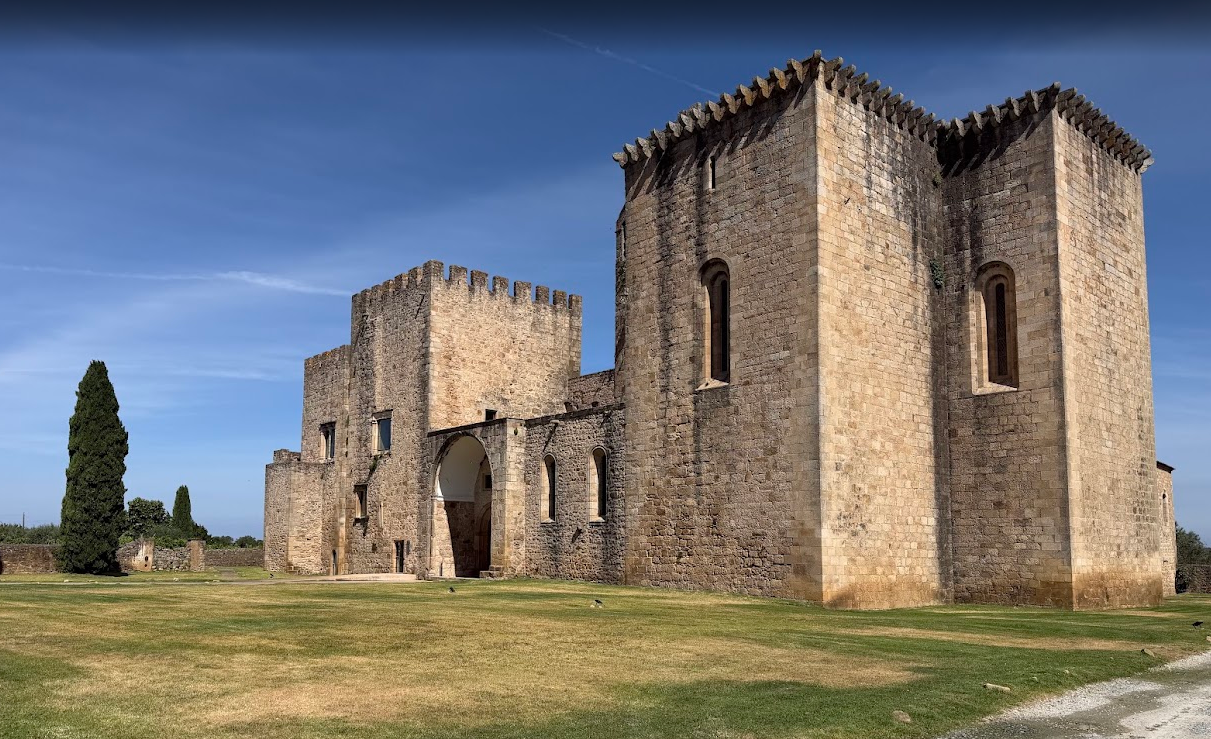
In June the wheat around Flor da Rosa has gone pale and wispy and the farmers walk their sheep past the walls in the early evening. Nobody looks up at the building. It has been there for six hundred and seventy years and it stopped being interesting to the village a long time ago.
That is the first thing worth saying about the Pousada Mosteiro do Crato. It sits in an ordinary Alentejo village — small, quiet, a few streets — and the village has entirely absorbed it. You can sit on the terrace with a coffee and watch livestock go by. The building was made for a frontier that no longer exists, and everything around it has relaxed accordingly.
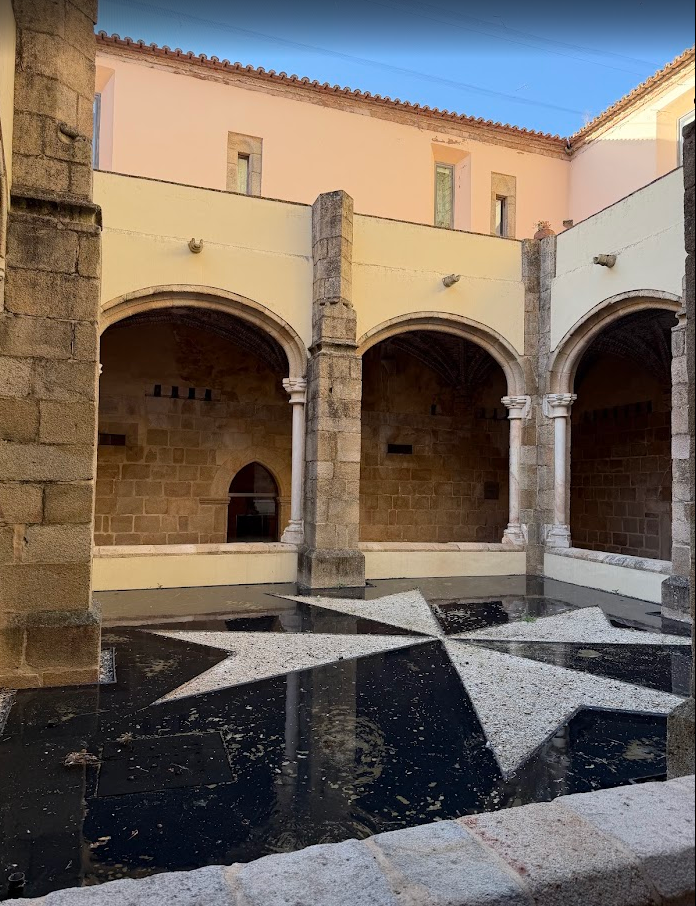
It was begun in 1356 by Dom Álvaro Gonçalves Pereira, Grand Prior of the Order of the Hospital, the crusading order later known as the Knights of Malta. That explains the shape of it. This is not a monastery with defensive touches; it is a fortress that happens to contain a church, built when the Alentejo was a contested border and the men living in it were expected to fight. Álvaro's tomb is still on the site. His son, Nuno Álvares Pereira, would go on to command at Aljubarrota and end up canonised.
A century of nothing
It was abandoned from the eighteenth century onward. Part of the church roof came down in the late nineteenth. By the time it was declared a national monument in 1910 it had already stood empty for something close to a hundred years, and restoration work did not begin in earnest until the 1940s.
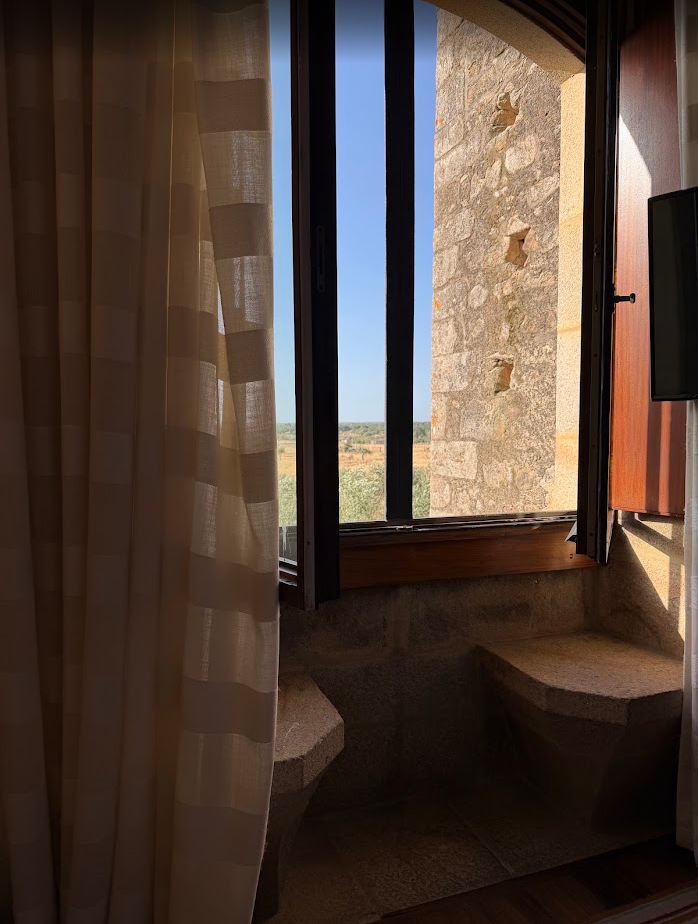
The conversion to a pousada came much later — the architect João Luís Carrilho da Graça took it on in the early nineties, and it opened in 1995. He said the place seemed labyrinthine the first time he walked through it, and rather than solving that, he worked with it. What he did instead was cut windows, so that when you lose your bearings you tend to arrive at one.
You can read his intervention off the walls. White plaster stops dead wherever the medieval stonework survived, and the join is left visible rather than blended. Stand in the right corner of the old wing and you can see exactly where the fourteenth century ends and the twentieth begins. It is a confident piece of work — a lesser architect would have faked the seam.